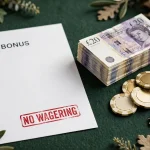
First-Deposit Bonus Casinos in the UK: Keno
 Available in GB

A first-deposit promotion may affect an account balance, but keno results come from a random draw governed by the game’s own mechanism.
Table of Contents
- Online Casino Bonuses and the Game Behind the Offer
- What a First-Deposit Offer Can—and Cannot—Tell You
- Percentage Matches Are Not the Whole Story
- When a Deposit Offer Is Used on Slots
- Free Spins, Keno Picks and Random Selection
- No-Wagering Claims and the Cost of Keno Play
- Bonus Terms Beside the Keno Paytable
- Welcome Offers Do Not Change the Draw
- A Larger Offer Is Not a Larger Chance of Winning
- First-Time Play: Set a Limit Before the Draw
Online Casino Bonuses and the Game Behind the Offer
A first-deposit bonus is part of how an online casino presents its offer to a new customer. Keno is something different: a game whose result comes from a random draw. Keeping those two layers separate is useful when judging any casino promotion. An offer may affect the account balance or the way a promotion is described, but it does not explain how a keno draw produces its result.
I have found that promotional language can make the account and the game sound like one package. They are not. The bonus sits in the casino’s commercial presentation; the keno round has its own mechanism. For online keno, a random number generator, or RNG, selects the numbers drawn. The result is not chosen to fit a player’s selection, an account’s history or a marketing message. Random means random.
That distinction matters because the first impression of a casino often comes from the welcome screen, not from the game itself. A prominent offer can set the tone of the visit, while the game is governed by its rules and draw process. With keno, players select spots before the draw, and the RNG generates the drawn numbers. The outcome is determined by that draw. Familiarity with a game, a preferred pattern or a feeling that a number is due does not make the next result predictable.
A first-deposit bonus is worth considering alongside how quickly winnings can be paid out. The notes below focus on the payout-speed information available for each operator.
1. BeOnBet
Payout speed: 1-3 business days Listed payout speed: 1–3 business days.
2. Dieselwin
Payout speed: 1-3 business days Listed payout speed: 1–3 business days.
3. Revery Play
Payout speed: 1-3 business days Listed payout speed: 1–3 business days.
4. Britsino
Payout speed: 1-3 business days Listed payout speed: 1–3 business days.
5. Jetsetspins
Payout speed: 1-3 business days Listed payout speed: 1–3 business days.
6. Zombillion
Payout speed: 1-3 business days Listed payout speed: 1–3 business days.
7. SpinFormula
Payout speed: 1-3 business days Listed payout speed: 1–3 business days.
8. NightWin
Payout speed: 1-3 business days Listed payout speed: 1–3 business days.
9. SlotoSport
Payout speed: 1-3 business days Listed payout speed: 1–3 business days.
10. Chanze
Payout speed: 1-3 business days Listed payout speed: 1–3 business days.
The word “best” is especially slippery in casino advertising. It can describe the size or presentation of an offer, but it does not establish that the underlying game is more favourable. In keno, no strategy guarantees a win. A selection method may change which spots are on a card, but it cannot control the numbers generated by the RNG. That is the practical boundary between choosing how to play and influencing what happens. The latter is not available.
From an industry perspective, this separation is easy to blur without stating anything technically false. A promotion draws attention; game information tends to sit elsewhere. The commercial message is immediate, while the mechanics require a closer look. A clear-minded assessment starts by treating the offer as one part of the casino experience and the game as another. Neither should be used as evidence for claims about the other.
Keno can also feel more personal than it is. A player chooses spots, sees them displayed on a card, and waits for the draw. That visible choice can invite a sense of control. But the choice belongs to the player; the draw belongs to the RNG. The interface may make the sequence engaging, yet it does not turn a random outcome into a forecast. No system of selecting spots can guarantee a result.
Greentube Online Casinos in the UK: Games and Checks · Best High-Volatility Slots UK: How They Work
There is a financial reality behind the game as well. Keno carries a house edge, and a specialist review has reported figures ranging from 5% to 40%, depending on the casino. The breadth of that reported range is a reason not to treat keno as a uniform product. A house edge of 25% or more is possible, so the game should not be assumed to offer favourable odds simply because the rules look simple. The actual game matters.
That point belongs beside, not inside, the advertising message. An attractive first-deposit offer does not reveal the odds of a keno game, and a random draw does not become less random because the account is new. I keep those questions apart: what the casino is promoting, and what determines the game result. Different questions. Different mechanics.
The broader online-casino context is therefore not only about what appears on a landing page. It is also about understanding which parts of the experience are presentation and which are game operation. In keno, the central mechanism is straightforward: the RNG picks the drawn numbers, and the outcome remains uncertain until the draw is made. Past results and chosen patterns do not provide a reliable way to know what comes next.
This is a useful starting point for anyone weighing a casino’s first-deposit promotion alongside its games. The offer may be the reason a casino gets attention, but it cannot serve as a shortcut for understanding keno. A random number generator determines the draw. No strategy guarantees a win.
Attention: A random number generator determines the draw, and no strategy can guarantee a win in keno.
What a First-Deposit Offer Can—and Cannot—Tell You
A first-deposit offer is a statement about a promotion, not a description of the game that may be played with it. The wording can make a casino’s welcome proposition sound like a single, comparable product. In practice, that label does not explain how a particular keno game works or what its paytable pays. I have seen those ideas blurred together in promotional copy; they need to be kept separate.
For someone considering a first deposit, the distinction matters. An offer may draw attention to the act of funding an account, but it cannot establish whether one keno game has the same rules or payout structure as another. Keno rules and payouts vary across platforms. The name of the promotion does not standardise them, and a general description of the casino does not substitute for the rules of the specific game.
The useful question is therefore not simply whether a casino has a first-deposit bonus. It is what the available wording actually tells the reader. It may indicate that an introductory promotion exists, but it does not, by itself, explain the keno mechanics, the possible outcomes or the value of a winning result. Those details belong to the game’s own information.
That is where the paytable comes in. It shows how the particular game relates a player’s selection to its payouts. A keno round is not interchangeable with another just because both games use the same name. Before wagering, the specific game’s paytable, rules and odds need to be checked. The relevant comparison is between the actual games being considered, not between promotional labels.
Fast Payout Online Casinos UK: Keno Payouts Explained · Nolimit City Slots at UK Online Casinos: Rules
I would treat any broad claim about a “best” first-deposit casino with the same care. “Best” is an advertising judgement unless its basis is made clear. A headline cannot tell whether the underlying keno game suits a player’s preferences, and it cannot make one platform’s payout structure apply to another. Without the game-specific details, a promotional phrase remains a phrase. No more than that.
There is also a basic distinction between the casino context and the game itself. In Great Britain, operators offering remote gambling to customers must hold the relevant UK Gambling Commission licence. Legal online gambling is available to adults aged 18 and over through licensed operators, and operators must verify a customer’s age before allowing a deposit. These are facts about the operator and the conditions for access; they do not tell anyone how a particular keno paytable works.
That separation is useful because casino advertising often places the promotion and the game side by side. The placement can suggest that the two form one package with a predictable value. They do not. The offer concerns the promotional arrangement; the keno game has its own rules and payout structure. One should not be read as evidence about the other.
The same caution applies to general statements about keno. A game’s name alone does not establish its odds, and a promotion does not improve or define them. Keno can have a house edge of 25% or more, with the actual figure depending on the casino and game. That is a material part of the context, not a detail that a first-deposit headline answers. A bonus label cannot be used as a proxy for the house edge.
Do
- Read the specific game’s paytable
- Check the individual rules and odds
- Assess game information separately from offers
Don’t
- Treat a promotional label as a game explanation
- Assume a bonus defines the house edge
- Use a welcome offer as a proxy for odds
In my experience, the operational mistake is to treat a simple label as a complete explanation. It is not. A first-deposit offer can tell the reader that a promotion is being presented to new depositing customers. It cannot establish that the casino’s keno rules match those elsewhere, that payouts are equivalent, or that the game’s odds are favourable. Those conclusions require the specific game information.
This is not a reason to dismiss promotions outright. It is a reason to read them for what they actually say, then assess the game separately. Promotional wording and game documentation answer different questions. The first concerns the offer; the second concerns how keno is played and paid. Mixing those questions creates an impression of certainty that the wording does not support.
So a first deposit may be the point at which a player encounters both a promotion and a keno game, but the shared timing does not make them the same decision. The game’s paytable, rules and odds remain the proper basis for understanding its mechanics. Payouts differ across platforms. Check the specific game before wagering.
Percentage Matches Are Not the Whole Story
A percentage in a deposit offer and a percentage in a game’s payout calculation describe different things. One belongs to the promotion; the other is part of how a particular keno game evaluates a result. Treating them as interchangeable makes an offer look more informative than it is.
Amatic Slots at UK Online Casinos: How They Work
I have seen promotional language do its job by making a number prominent. “A percentage match” tells how a bonus is calculated against a qualifying deposit, if the offer’s terms provide for one. It does not show how likely a keno ticket is to win, how much a winning ticket pays, or whether the game suits a particular budget. Those questions sit elsewhere, in the game rules and paytable.
Keno winnings depend on two connected details: how many spots are selected and how many of those spots match the draw. The match count alone is not the whole calculation; the number of spots on the ticket matters too. A payout table sets out how a particular game treats those combinations. There is no single payout percentage that can be carried across every keno game.
That distinction matters when a first-deposit promotion is described with a large percentage. The promotional figure is not a measure of the return from a keno wager. It cannot be used to infer the value of a catch, and it does not rewrite the paytable. A deposit bonus and a game payout are separate mechanisms, even when both are expressed with percentages.
The practical check is to read the game’s paytable alongside its rules and odds before wagering. Keno payouts vary across platforms, so a result that pays one way in one game may be treated differently in another. The paytable is where the relationship between selected spots, matches and any stated prize becomes visible. A headline offer cannot substitute for that detail.
Keno carries a house edge that can range from 5% to 40% depending on the casino, with some games reaching 25% or more.
There is also a cost behind the game’s structure. Keno can carry a house edge of 25% or more; a specialist review reports a range from 5% to 40%, depending on the casino. The actual game and platform matter, so the range should not be mistaken for a guaranteed rate for any particular ticket. The promotional percentage does not remove that edge.
In my experience, the confusion starts when the same visual format—a percentage—gets treated as if it must answer the same question. It does not. A bonus percentage concerns the promotional calculation. A payout table concerns what the game pays for a result. Neither one, on its own, establishes the other.
For a keno decision, the useful comparison is not between a deposit-bonus percentage and a supposed game return. It is between the exact rules and paytable of the game being considered, including how that game pays for the selected spots and catches. If that information is unclear, the offer’s headline does not fill the gap.
The number in an advert can be easy to remember. The game mechanics are what determine the keno payout. Keep them separate.
When a Deposit Offer Is Used on Slots
A promotion described as a slot offer and the mechanics of a keno game are separate matters. A keno explanation cannot establish whether a first-deposit promotion is eligible for slots, which games qualify, or what conditions apply. Those details belong to the offer’s own terms. The word “bonus” is not a rulebook.
Best High-RTP Slots in the UK: What RTP Means
I have found it useful to keep the game description in view rather than let promotional labels blur the distinction. Keno is built around spots chosen before a draw; a slot game is not described by that process. Nothing about the keno rules alone confirms that a deposit offer can be used on either game type. Eligibility has to be stated for the specific promotion and games concerned.
In keno, the player marks spots on a card before the draw. The number of spots available depends on the particular game: a game may allow a choice of up to 10, 15 or 20. The draw then selects numbers at random. Some versions draw fewer than 20, while others draw as many as 20. The sequence matters: selection comes first, then the draw. A deposit promotion does not turn that process into a slot spin.
That distinction matters when a page places “slots” beside a general welcome or first-deposit message. The placement of the words is not proof of eligibility. A promotion may have game-specific conditions, and its description needs to identify what it covers. If it names only a general offer, the keno mechanics cannot fill in the missing detail. Nor can the existence of a keno game establish that a slot game is included.
The same care applies when moving from one game to another inside a casino account. Keno has a card, a set of chosen spots and a random draw. A slot has its own game interface and rules. Treating them as interchangeable because both appear on a casino site is a category error. On the counter, that is where expectation gets ahead of the terms.
Keno game mechanics
In keno, players mark spots on a card before a draw. The number of available picks varies by game (e.g., 10, 15, or 20), and the RNG selects the drawn numbers randomly.
For keno itself, the number of available picks is not universal. One version may offer fewer choices than another, and a player’s selection must fit the options that game provides. The draw is also not fixed to the same count across every variant: some draw fewer numbers, while others draw up to 20. Those are features of the keno game, not clues about whether a slot promotion can be claimed or played through.
A slot-focused offer therefore needs to be judged by its stated scope, not by borrowing rules from a different game. Keno’s spot-selection process explains how a keno round is set up; it says nothing about slot eligibility or bonus conditions. Keep the categories apart. The game determines how its round works. The promotion terms determine where its value may be used.
Free Spins, Keno Picks and Random Selection
A first-deposit promotion advertised with free spins belongs to the offer side of a casino, not to the way a keno round is played. I keep those ideas separate: promotional wording does not tell anyone how keno selects its spots, and choosing spots does not create a free-spin benefit. Whether an offer includes spins, and which games it covers, depends on its own terms; it should not be assumed to apply to keno.
In keno, the player makes a selection before the draw. Spots can be marked manually, or an automated random-selection feature can choose them instead. The second option changes who makes the selection, not the nature of the game: the drawn numbers are still selected at random. A manually chosen pattern is no more influential than an automated one.
Amatic Slots at UK Online Casinos: Rules and Play
That distinction is easy to blur in promotional copy. “Free” describes the stated price of a promotional play, not a change to the random process or a better chance of catching a spot. And a spin is not a keno pick. Treating the two as interchangeable can leave the basic question unanswered: what does the keno game pay for the selection made?
The answer sits in that particular game’s rules and paytable. Keno payouts vary across platforms, so the same selection should not be assumed to return the same amount everywhere. Before wagering, the specific game’s paytable, rules and odds need checking. A broad offer label cannot substitute for those details.
I have seen the word “random” used as though it were a shortcut to a better choice. It is only a selection method. Manual picks can feel deliberate, while automated picks remove the act of choosing; neither makes a future draw predictable. There is no reliable basis for treating favourite or repeated spots as more likely to be drawn.
The cost side also deserves plain language. A specialist review reports that keno’s house edge can be 25% or more in some cases, and the stated range varies by casino. That is a reason to examine the particular game, not a claim that every version has identical odds. The platform and paytable matter.
Caution: Neither manual nor automated random-selection features change the random nature of the draw or improve the chance of winning.
So a casino promotion featuring free spins should be read as a separate offer, with its own stated scope. Keno selection remains a choice between marking spots by hand and using random selection. Neither method turns a promotion into a keno advantage.
Different mechanics. Different terms.
No-Wagering Claims and the Cost of Keno Play
“No wagering” describes a promotion’s conditions, not the price or risk of the game played with any resulting funds. The phrase can sound like a clean measure of value, but it says nothing by itself about how much a keno round costs, how its paytable works or what proportion of stakes the game retains over time. Those are separate questions.
I have seen promotional wording do its job by making one condition prominent while leaving the underlying game mechanics in the background. A claim about wagering requirements should therefore be read as a claim about the offer only. It is not evidence that keno is low-cost, favourable or less risky. Nor does it establish that a particular first-deposit promotion applies to keno.
The house edge is the more relevant measure when considering the game’s long-run cost. A specialist review reports a keno range from 5% to 40%, with the casino affecting where a game sits within it. That is a broad spread, not a universal rate for every online keno game. A review’s range also cannot identify the edge of a specific game without its rules and paytable. The upper end is substantial: keno can have a house edge of 25% or more. That warning matters more than a promotion label.
Barcrest Online Casinos in the UK: What Can Be Verified
The house edge is a statistical measure across repeated play, not a forecast of what happens in one session. Individual results remain variable; a player can win or lose in the short term. Over time, however, a larger edge means a greater expected share of stakes retained by the house. It should not be mistaken for a charge taken from each bet, and it does not promise a particular result on the next draw.
Actual cost depends on the specific game and platform. Keno rules and payouts differ, so the same selection of spots does not imply the same return everywhere. The stake chosen also affects how much money is exposed in each round, while the paytable determines what matching results pay. A promotional balance does not remove those mechanics.
Before wagering, the specific game’s paytable, rules and odds need checking. The paytable shows how catches are rewarded; the rules explain the available selections and any variant features; the odds help put those payouts in context. Without those details, a headline about no wagering cannot establish the likely cost of play. Separate the two decisions: what the offer requires, and what the game risks. No shortcut.
Bonus Terms Beside the Keno Paytable
A first-deposit bonus headline and a keno paytable answer different questions. The promotion describes an offer; the paytable sets out how that particular game treats a bet and a result. I have seen those two things blurred in casino copy, where a prominent welcome message can make the game itself seem more uniform than it is. It is not.
A bonus label is not a game rule; the paytable is the practical reference point for understanding how a keno bet is rewarded.
The wording “best” does not settle whether an offer fits a particular game, and a headline cannot stand in for the terms attached to the promotion. Nor does it explain what a keno bet may return. Those details need to be assessed separately. A bonus label is not a game rule.
Keno rules and payouts vary between platforms. The paytable is therefore the practical reference point before wagering: it shows the game’s own payout structure, while the rules explain how that structure is applied. The odds matter too. A familiar game name does not establish that two versions use the same rules or pay the same way.
A specialist review reports that keno’s house edge can range from 5% to 40%, depending on the casino. That reported spread is a reason not to treat the game as having one standard cost: some versions can have a house edge of 25% or more. The specific game’s paytable and odds still need checking; a broad range cannot tell what applies to a particular table.
When comparing first-deposit or welcome offers, it is easy to focus on the promotional wording and overlook the game being played. I separate those checks. First, read the offer’s own terms; then inspect the keno rules, paytable and odds on the relevant platform. The first check concerns the promotion. The second concerns the game.
That distinction also matters when a casino presents live-casino promotions beside other games. The promotional category does not make keno payouts consistent across platforms. A paytable for one version cannot safely be assumed to describe another. Small print on the offer and game information on the keno screen do separate jobs.
Eyecon Slots at UK Online Casinos: What to Check
The useful comparison is not simply which welcome message sounds strongest. It is whether the offer terms are clear and whether the game’s own rules and paytable can be understood before a wager is placed. Promotional language can attract attention. The paytable does the accounting.
Welcome Offers Do Not Change the Draw
A welcome offer belongs to the account promotion; the keno draw belongs to the game. They sit beside each other on a casino page, but they do different jobs. An offer may affect how a deposit is credited or used under its terms. It does not alter which spots are drawn.
In legitimate keno, the result is random. Choosing particular spots has no effect on the outcome, and a welcome bonus cannot make a chosen spot more likely to be caught. I have seen promotional language make an offer feel like a reason to expect more from a session. That is where the distinction matters: promotional value and game probability are separate things.
The same applies whether an offer is described as a first-deposit bonus or given a large percentage figure. The wording alone says nothing about the result of a keno round. Nor does it make a set of numbers “hot” or “lucky”. Those labels may sound persuasive, but no chosen pattern changes a legitimate draw.
The practical check is the game itself. Keno payouts and rules vary between platforms, so the specific paytable, rules and odds should be checked before wagering. The draw is not adjusted to suit a promotion. No system can guarantee a win.
Check Before Wagering
- Review the game’s specific paytable
- Read the rules and odds on the platform
- Verify the house edge for the specific game
- Confirm the promotion’s terms and conditions
There is also a cost behind the entertainment. Keno can have a house edge of 25% or more; a specialist review reports a range from 5% to 40%, with the figure depending on the casino. That range is not a promise about any particular game. The platform and its rules matter.
A large headline can draw attention. It cannot turn chance into control. I keep those two questions apart: what an offer says about the account, and what the keno rules say about the game. Only the second tells how the draw works.
A Larger Offer Is Not a Larger Chance of Winning
A large first-deposit bonus can look like a reason to choose one casino over another. It says something about the promotion, not about the chance of a keno result. The draw does not take account of the size of a deposit or the wording used to advertise an offer.
Online Casinos With No Limits: What UK Rules Mean
I have seen promotional value and game probability treated as if they belonged on the same scale. They do not. In keno, each round is a separate draw, and repeating a selection does not make those spots more likely to be drawn. A multi-race card lets a player carry the same spots across consecutive games; it is a convenience, not an odds adjustment.
That distinction matters when a bonus is described as “big”. The word may make an offer sound more valuable, but it cannot turn a losing pattern into a winning one or improve the chance that selected spots will catch. No system can guarantee a win.
The underlying game still deserves scrutiny. Keno payouts and rules differ between platforms, and the house edge can be 25% or more. A specialist review has reported a range from 5% to 40%, depending on the casino; that spread is a reminder not to assume every version has the same cost. Check the particular game’s paytable, rules and odds before wagering. Read the game, not the headline.
Online craps casinos in the UK: regulation and checks
In practical terms, a larger promotion and a better chance of winning are separate claims. The first concerns an offer; the second depends on the game and its draw. Keeping them apart makes comparison more useful, even where promotional wording is designed to make the offer feel like an advantage at the table. It is not.
First-Time Play: Set a Limit Before the Draw
A first deposit is also the point at which a spending decision becomes real. I treat the deposit amount as a ceiling for the session, not as a starting figure to replenish if a run goes badly. Decide beforehand what can be spent without affecting bills or other commitments, then stop when that amount is gone. Chasing losses turns one fixed decision into a series of emotional ones.
Keno makes that discipline relevant. A specialist review puts the possible house edge between 5% and 40%, depending on the casino; some games therefore have an edge of 25% or more. The specific game matters, and no betting pattern removes that risk. Set a budget that reflects the possibility of losing the full stake.
A UK-licensed operator must prompt new customers to set a financial limit before their first deposit and provide account controls for managing limits. That safeguard works best when the limit is chosen as a genuine boundary, rather than raised in response to losses.
Bankroll size should also guide game choice: select keno with bets that fit the amount already set aside. The aim is to keep each stake within that budget, not to make a small balance stretch through repeated deposits.
Before wagering, check the particular game’s paytable, rules and odds. Keno payouts vary between platforms, so a limit alone does not make one game equivalent to another. Budget first. Then play, or stop.
How do you play Keno?
Choose numbers on a card numbered from 1 to 80, set your bet, and wait for the draw. Your payout depends on how many of your selections match the numbers drawn.
How important is it to pick the right Keno game?
It matters because Keno rules, paytables and odds vary between games. Check the specific game’s rules and paytable before betting.
How do I choose a line and place a bet?
Select numbers manually or use an automated random selection, then choose your bet size. The available number of picks depends on the game.
How many numbers can I choose in Keno?
The number varies by game; players can commonly choose up to 10–15 numbers, while some games allow up to 20.
How much does it cost?
Minimum stakes are £1, and you can choose a bet size that fits your budget.
Are there different versions of Keno?
Yes. Variants can differ in how many numbers are drawn, their rules and payouts, and features such as multipliers or rewards for matching no numbers.
What is the house edge in Keno?
It can range from 5% to 40%, depending on the casino and game. Check the specific game’s information before playing.
Games

Aviator Casino Game in the UK: Sites and Rules
The guide puts licensing status in context and explains how to assess claims about gameplay,...

3-Reel Slots in the UK: How Online Play Works
Three-reel slots retain a compact machine layout, but online play takes place through a remote...

Five-Reel Slots in the UK: How They Work
Reel count describes the layout, while rules determine how bets, features and play options work....

Amatic Slots at UK Casinos: Availability and Access
Amatic supplies games to casino operators, while the operator provides the account, takes bets and...

Best Android Casinos UK: Browser Games and Apps
Learn how browser play, operator apps, game availability and UK licensing shape access to Amatic...

Barcrest Online Casinos in the UK: What Can Be Verified
Supplier claims, casino licensing and game listings are treated separately where evidence for Barcrest availability...

Betsoft Online Casinos UK: What Can Be Verified
The available records document Amatic’s five-reel, three-row format, but do not verify Betsoft casinos, games...

BGaming Online Casinos UK: Why Amatic Is Different
A supplier name alone cannot confirm a casino’s BGaming catalogue or identify the operator responsible...

Best Bingo Casinos UK: Amatic Slots and Site Checks
Amatic supplies games to operators, directly or through an aggregator; the casino remains the player-facing...

Amatic Slots in UK Casinos: Rules and Features
A practical guide to game features, bonus conditions, UK oversight and the limits of a...

Bonus Buy Slots in the UK: Demo, Costs and Features
Explore how buying a feature affects the base game, what demo play can reveal, and...

Online craps casinos in the UK: regulation and checks
The guide separates UK regulatory oversight from claims about game availability, formats and real-money play....

Amatic Slots at UK Casinos: Games, Rules and Offers
A practical guide to Amatic slot mechanics, UK stake rules, free-spin terms, RTP versions and...

Amatic Slots at UK Online Casinos: How They Work
A guide to Amatic’s slot formats, casino distribution, variable RTP and the terms that can...

Endorphina Slots in UK Casinos: Availability and Evidence
Endorphina and Amatic are distinct suppliers, so casino availability and game claims need to be...

Evolution Gaming Casinos UK: How Amatic Differs
Amatic games may appear through UK-licensed casino operators, but their presence does not establish that...

Fast Payout Online Casinos UK: Keno Payouts Explained
A keno paytable values caught spots in a draw, while withdrawal processing is a separate...

Greentube Online Casinos in the UK: Games and Checks
Greentube branding identifies games, but does not establish who operates a casino or which rules...

Habanero online casinos UK: what to verify
A provider category is only a starting point: game availability must be checked in the...

Best High-Volatility Slots UK: How They Work
High volatility means less frequent wins that may be larger, but it cannot predict when...

Amatic Slots at UK Online Casinos: Rules and Play
See how game features, casino operators, bonus terms and UK safeguards shape the way Amatic...

Amatic Games at UK Online Casinos: How They Appear
Amatic games are supplied to casino operators, whose selections and lobby layouts determine which titles...

Amatic Slots in UK Casinos: How Lobby Access Works
Amatic titles appear within casino lobbies, where each operator’s selection and search tools shape how...

Keno at UK Online Casinos: Odds and How It Works
Keno uses numbered cards and random draws; game rules determine pick limits and how matched...

Best Live Casino UK: Games, Tables and Offers
Follow a live round from stream to betting interface, then compare table formats, game decisions...

Low-volatility slots in the UK: how they work
Low volatility describes the pattern of wins, while RTP concerns long-run returns; neither predicts what...

Amatic Slots at UK Casinos: Rules and Play
A practical guide to Amatic game features, casino availability, promotional terms and how UK slot...

New Online Casino Sites UK: Amatic Slots Explained
Explore slot mechanics, bonus conditions, and the distinction between a game supplier and the casino...

Novomatic Online Casinos UK: What Amatic Means
The guide separates Amatic’s software from casino operators and explains game versions, access, bonuses and...

Online Casino Game Shows in the UK: How They Work
The label “game show” signals an entertainment category, but each title’s rules are needed to...

UK Jackpot Slots: Casinos, Games and Prize Rules
A jackpot is a prize feature, while licensing, game versions, stake rules and bonus terms...

Big Time Gaming Slots at UK Online Casinos
Provider labels are only a starting point; casino availability, game features and promotional terms require...

Divine Fortune in UK casinos: what the evidence shows
The available information separates title-specific evidence from general facts about Amatic, demos and casino operators....

Eyecon Slots at UK Online Casinos: What to Check
A guide to checking game availability, casino roles, demo access and bonus terms without relying...

Jackpot King Slots in UK Casinos: What Is Verified
The label needs a specific title and supplier before game features or casino availability can...

Mega Moolah Casinos in the UK: Rules and Checks
The guide separates UK slot protections from game features and explains what can—and cannot—be verified...

Megaways Slots in the UK: What Can Be Verified
Game-specific rules and published details matter more than a category label when assessing slots and...

Microgaming Slots at UK Online Casinos: What to Verify
A provider name alone does not confirm which titles a UK casino currently offers or...

NetEnt Slots at UK Online Casinos: What to Check
A practical check of provider availability, operator authorisation and the details that shape a NetEnt...

Online Casinos With No Limits: What UK Rules Mean
The phrase can refer to an operator’s own betting conditions, but it does not override...

Nolimit City Slots at UK Online Casinos: Rules
The guide separates the slot provider from the gambling service and explains what UK regulation...

Play'n GO Slots at UK Online Casinos: What to Know
A practical look at UK slot rules, Play'n GO game availability, RTP checks and the...

Push Gaming Casinos in the UK: Games and Checks
Push Gaming supplies slots, while UK casino operators manage access, deposits and the licensed gambling...

Red Tiger Slots at UK Casinos: What to Check
This guide separates verifiable game details from claims about rankings, availability, software, free play and...

Thunderkick Slots at UK Online Casinos: What to Check
A provider name does not confirm a slot’s features or a casino’s current catalogue; title-specific...

Yggdrasil Slots at UK Casinos: What’s Verified
A practical guide to checking game details, casino listings, play rules and bonus terms without...

Online Slot Payout Percentage: What It Measures
A game's stated return is not a forecast for an individual session or a figure...

Amatic Slots in UK Casinos: Games and RTP
A practical guide to Amatic game mechanics, casino availability, free play, RTP differences and bonus...

Playtech online casinos UK: games and licensing
Playtech identifies a software catalogue; it does not identify the licensed business or confirm a...

Amatic Slots in UK Online Casinos: How They Work
A practical guide to Amatic slot rules, free-play and real-money versions, bonus conditions and finding...

Progressive Jackpot Slots: How the Pools Work
See how wager contributions build shared prizes, how online play affects them, and what to...

Quickspin online casinos in the UK: checking availability
The article distinguishes game labels and provider claims from evidence about access, bonuses, licensing and...

Real-Money Online Casinos UK: How Amatic Games Work
Amatic supplies the software, while UK-licensed operators decide which games appear and how players can...

Amatic Slots in UK Casinos: Games, Bonuses and RTP
Learn how Amatic games are presented in casino lobbies, what paytables and bonus terms explain,...

RTG Casinos in the UK: Licensing and Evidence
The guide distinguishes software providers from operators and examines licensing, RTP evidence, free play, promotions,...

Best RTP Casino Slots in the UK: How RTP Works
Learn what a slot’s published return says over extensive play, how volatility shapes results, and...

Slingo Casinos UK: Understanding Amatic Slot Listings
Amatic slot mechanics, casino availability and licensing claims help clarify what a listing does—and does...

Stakelogic Casinos in the UK: What Can Be Verified
A provider’s catalogue does not establish that a specific Stakelogic game is currently offered by...

Best Video Slots UK: Reels, Features and Play
Reel layouts, payline design, bonus features and session maths all affect how a video slot...

Wazdan Online Casinos in the UK: What Can Be Verified
Provider identity matters: a familiar slot style or feature does not establish that a game...

Casino Dice Game UK: Online Formats Explained
Online games may show dice without using physical dice, and the rules and mechanics depend...

Chicken Road Game in UK Casinos: What to Know
A practical look at Chicken Road’s game category, crash-game terminology, demo evidence and the small...
Classic Slots Online in the UK: How They Work
A practical guide to classic-style reels, game controls, free play, and checks around bonuses, account...

Crash Casino Games in the UK: How They Work
The guide frames crash play through the basic wager, possible outcomes and wider questions raised...

Crazy Time Live Casino Game Show in the UK
The studio feed shows the live event, while separate on-screen controls handle bets; the presentation...

Deal or No Deal Casino UK: Game Rules and Offers
The familiar banker’s offer frames the search, but the online game has its own progression,...

Fastest payout online casinos UK: keno claims explained
Keno awards follow game rules, while the time funds become available depends on the casino...

French Roulette Online Casinos in the UK
French roulette has the same pocket count as European roulette, but La Partage changes how...

Fruit Machine Slots UK: How Online Reels Work
A guide to RNG outcomes, familiar fruit-machine layouts, demo versions and checks to consider before...

Hi-Lo Casino UK: Rules, Cards and How Play Works
Hi-Lo formats use different mechanics, from a live card setting the next comparison to draw...

Best High-RTP Slots in the UK: What RTP Means
RTP describes a game's theoretical return over extensive play, not the outcome of an individual...

Jackpot Mobile Casinos in the UK: Game Types and Checks
Jackpot terms cover different prize mechanics, while a game label alone does not explain triggers,...

JetX Casino Game in the UK: Format and Play
Game classifications describe how play is organised, but they do not establish a title's rules,...

Live Baccarat Online Casinos in the UK: What to Check
A practical guide to UK operator licensing, baccarat rules and totals, live play, real-money limits,...

Live Blackjack Online Casinos in the UK: Rules and Play
The guide separates hand decisions from staking patterns and explains why no betting system can...

Live Casino Lightning Roulette in the UK Explained
A look at the live feed, betting interface and physical wheel, and how they shape...

Live Dream Catcher Casino UK: How It Works
A look at how the dealer, studio video and betting interface work together in an...

Live Roulette UK with English-Speaking Dealers
A clear guide to the dealer-led stream, the physical wheel and the software controls used...

Mines Casino Game in the UK: Rules and Licensing
A practical look at UK market access, Mines mechanics, demo claims and the limits of...

Monopoly Live Casino UK: How to Compare Live Games
Understand what “live” means, how table mechanics and stats work, and what demos and bonus...

Online Bingo in the UK: Formats, Tickets and Rules
A practical guide to ticket formats, prize conditions, licences, withdrawals and managing a mobile-play budget....

Online American Roulette in the UK: Wheel and Odds
American roulette adds a double-zero pocket, changing the number of outcomes and the house edge...

Online European Roulette Casinos in the UK: A Guide
European roulette uses a 37-pocket single-zero wheel, shaping its odds, betting options and how it...

Online Casino Games for Real Cash in the UK
A guide to slot outcomes and the practical conditions that affect real-cash play, from payment...

Online Casino Tournaments UK: Rules and Formats
Tournament formats set the limits of play, while scoring rules and entry conditions determine how...

Online Casino Without ID in the UK: What It Means
A registration that skips document uploads does not guarantee that identity checks are waived later...

Penny Slots Machines in the UK: Rules and Stakes
A practical guide to stake limits, game information, bonus conditions and the difference between free...

Plinko Casino UK: Licensing, Bonuses and Payments
The guide separates casino-platform terms and regulatory status from claims about Plinko itself. How Plinko...

Progressive Slots Online UK: How Jackpots Work
Progressive prizes grow from qualifying wagers, with contributions potentially shared across linked games and operators....

UK Online Casino Payouts: Understanding RTP
RTP describes a game's theoretical long-run returns, while session results vary; learn how to compare...

Online casinos UK: how Amatic games reach sites
Amatic develops software for gambling businesses, while operators control access, game availability and the terms...

UK Casino Sites for Slots: What to Check
A practical framework for assessing game information, UK play rules, costs, testing and bonus conditions...