
Online European Roulette Casinos in the UK: A Guide
 Available in GB
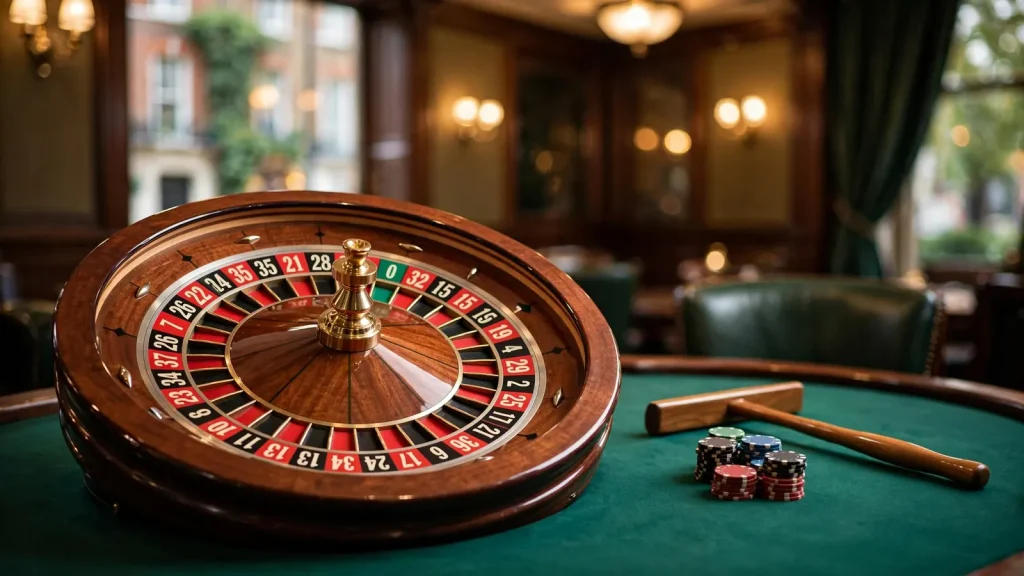
European roulette uses a 37-pocket single-zero wheel, shaping its odds, betting options and how it differs from American roulette.
Table of Contents
- European Roulette: One Zero, 37 Pockets
- How to Assess a UK European Roulette Casino
- Roulette Bets, Payouts and the Limits of Betting Systems
- Finding European Roulette and Choosing a Wheel Format
- The Single-Zero Layout and What Happens on Zero
- Free Play, Real-Money Play and Roulette Bonus Terms
- Reading the Roulette Table: Inside and Outside Bets
- Roulette-Branded Slots Are a Different Game
- Live European Roulette: Dealer, Pace and UK Safeguards
- European vs American Roulette: The Extra Zero Changes the Edge
European Roulette: One Zero, 37 Pockets
European roulette is defined by its wheel: thirty-seven pockets, numbered from 1 to 36, plus a single zero. The ball comes to rest in one of them, and that result determines the outcome of the spin. When an online casino lists a European roulette game, the single-zero wheel is the feature to look for. The name describes the wheel’s pocket set, not a promise about pace, presentation or table conditions.
That distinction matters because roulette names can sound interchangeable in a lobby. They are not. European roulette has one green zero pocket; the numbered pockets are red or black. The zero is part of the game, not a decorative gap between the colours. It is included in the possible outcomes and affects the underlying odds. A wheel without that pocket would not have the same mechanics or house edge.
The house edge for European roulette is 2.70%. In plain terms, it describes the casino’s mathematical advantage over time, expressed in relation to the amount wagered. It does not mean that every spin takes a fixed share of a stake, or that a particular session will finish with a loss of that size. Individual results vary. A player can win or lose on a given spin, and a short run can look very different from the long-run expectation.
When choosing an online casino for European roulette in the UK, it can help to consider practical details alongside the game itself. This list includes the payout-speed information available for each operator.
1. BeOnBet
Payout speed: 1-3 business days BeOnBet lists a payout speed of 1–3 business days, a useful detail to consider when playing European roulette.
2. Dieselwin
Payout speed: 1-3 business days Dieselwin lists a payout speed of 1–3 business days for players considering its roulette offering.
3. Revery Play
Payout speed: 1-3 business days Revery Play lists payouts as taking 1–3 business days, providing a clear cashout-time estimate.
4. Britsino
Payout speed: 1-3 business days Britsino lists a payout speed of 1–3 business days, which may be relevant when choosing where to play roulette.
5. Jetsetspins
Payout speed: 1-3 business days Jetsetspins lists a payout speed of 1–3 business days for players weighing practical details.
6. Zombillion
Payout speed: 1-3 business days Zombillion lists payouts as taking 1–3 business days, a concrete detail to keep in mind.
7. SpinFormula
Payout speed: 1-3 business days SpinFormula lists a payout speed of 1–3 business days for players considering European roulette.
8. NightWin
Payout speed: 1-3 business days NightWin lists a payout speed of 1–3 business days, giving players a stated timeframe for payouts.
9. SlotoSport
Payout speed: 1-3 business days SlotoSport lists payouts as taking 1–3 business days, a practical detail for roulette players to note.
10. Chanze
Payout speed: 1-3 business days Chanze lists a payout speed of 1–3 business days for players considering its roulette offering.
I find that distinction easy to miss in casino copy. A figure such as 2.70% can be presented as though it were a forecast for an individual session. It is not. The edge is a property of the game’s mathematics, calculated across repeated play, rather than a schedule of what will happen next. It gives a way to compare the built-in advantage of games, but it cannot tell anyone which pocket the ball will reach.
The single zero is central to that calculation. There are thirty-seven possible pockets, and the result is determined by where the ball lands. The zero gives the wheel an outcome that is neither red nor black and neither odd nor even. Those familiar groupings do not cover every pocket. That is the structural reason the wheel’s results cannot be treated as a simple alternation between two sides.
A common mistake is to read a run of results as evidence that the wheel is “due” to produce something different. The word sounds like analysis; in practice, it turns a previous sequence into a prediction it cannot support. Each spin is determined by chance. Seeing the same colour several times does not make the other colour inevitable on the next spin, and a number’s recent absence does not make it more likely to appear. The wheel has no memory.
Live Casino Lightning Roulette in the UK Explained
This is also why the European label should be understood as a rule description, not a performance claim. It does not mean that a game is more predictable, that a chosen number has improved prospects, or that a particular casino can alter the mathematical edge by presenting the wheel differently. The defining facts remain the pocket set and the single zero. Everything else is a separate question about how a game is delivered or what conditions apply.
When I check a roulette title, I start with the wheel itself rather than its promotional wording. “European” is useful only when it corresponds to the one-zero arrangement. A game title may be surrounded by other labels, graphics or features, but those do not change what makes the wheel European. The pocket count is the basic check; the house edge describes the resulting long-run advantage.
That does not make the edge a measure of whether a session is worthwhile for a particular person. It is a mathematical description, not a guarantee of a specific result or a recommendation to play. The practical point is narrower: the single-zero European wheel has a defined structure, and its 2.70% house edge follows from that structure. It remains the same whether a spin produces a win or a loss.
For online play, the wheel may be displayed on a screen, but the terminology still refers to the roulette variant being offered. The word “online” changes where the game is accessed; it does not change the meaning of European roulette. If a title is described as European, the defining feature is one zero alongside the numbered pockets from 1 to 36. A clear understanding starts there.
European Roulette Basics
One zero, thirty-six numbered pockets, and a house edge of 2.70%.
The wheel is simple to describe and easy to overinterpret. One zero. Thirty-six numbered pockets. A house edge of 2.70%. Those facts explain the game’s basic shape; they do not reveal the next result.
How to Assess a UK European Roulette Casino
“Best” is a sales label, not a useful measure on its own. When I assess an online casino offering European roulette, I look first for information that can be checked: the game’s published return to player (RTP), the rules attached to play and the operator’s UK regulatory status. A polished lobby tells very little about any of those.
RTP should be available in the game information or its rules, not buried behind a promotional claim. It is a theoretical measure over extensive play, not a forecast of what an individual session will return. A clear operator identifies the figure for the specific roulette game and makes the applicable rules easy to find. If the figure is absent, or the wording leaves it unclear which version of a game it applies to, that is a transparency problem—not a reason to assume the most favourable interpretation.
The same applies to terms. The game rules explain how the game operates; the account and promotion terms explain what counts for wagering, which games are excluded and what restrictions apply. Those are separate documents for a reason. An appealing bonus headline can sit alongside conditions that make roulette play contribute little, or nothing, towards clearing bonus funds. The detail that matters is the game-weighting rule attached to the particular offer, rather than a broad statement about casino games.
A specialist review has reported that, from January 2026, UK rules cap bonus wagering at a maximum of 10x for licensed operators. That claim should not replace reading the operator’s own current terms and the relevant regulatory information. Bonus language changes, and a headline alone does not show how a promotion treats roulette.
Online Casino Tournaments UK: Rules and Formats
For British customers, regulatory status is a basic threshold, not a badge of quality. The UK Gambling Commission is the regulator for online casino activity in Great Britain. Remote operators selling into the British market must hold the relevant UKGC licence, wherever they are based. A site’s own statement that it is “trusted” is not proof. The licence should be checked against the Commission’s public register before funds are deposited; the operator’s name and the permissions shown there need to match the service being offered.
There are practical protections to look for alongside that licence. UKGC-licensed operators must verify age before allowing a customer to deposit. They must prompt new customers to set a financial limit before the first deposit and provide accessible account-level limit controls. The required safer-gambling tools include deposit and loss limits, session time reminders, reality checks, cool-off periods and GamStop self-exclusion. These controls are part of the operating framework, not optional extras invented by a casino’s marketing team.
The account paperwork matters too. A UKGC licensee must provide an internal complaints process and access to an approved Alternative Dispute Resolution service. That gives a customer a defined route if a dispute cannot be resolved directly with the operator. The terms should explain how complaints are raised and where the independent route sits. Vague assurances of “fair treatment” do not answer either question.
I also treat payment wording as a useful test of operational clarity. UKGC-licensed casinos cannot accept credit cards for gambling, including through a money service business or a wallet that lets credit-card funds be used. If payment information is unclear, the issue is not solved by a reassuring banner; the applicable rules should be explicit.
Verifying a Casino
- Check the operator’s UKGC licence on the public register
- Locate the published RTP for the specific roulette game
- Review game-weighting rules for any active bonuses
- Confirm access to account-level deposit and loss limits
- Verify the internal complaints process and ADR service
In practice, a credible choice is the one whose game information, terms and licence status can be verified without guesswork. RTP is visible. Roulette’s treatment under any promotion is stated. The operator appears on the register with the right permissions, and the account controls and complaint routes are easy to locate. No ranking can replace those checks. Clear paperwork, first.
Roulette Bets, Payouts and the Limits of Betting Systems
Roulette payouts reflect how many outcomes a bet covers, not a prediction about where the ball will land. A bet on one number is the narrowest common choice: if that number wins, the payout is 35:1. A split bet covers two adjacent numbers and pays 17:1. The higher return on the single-number bet comes with a lower chance of success on any individual spin.
Outside bets cover broader categories. Red or black, even or odd, and high or low each pay 1:1. These bets can produce more frequent wins than a single-number selection, but the payout is smaller. The distinction is useful when comparing European roulette payouts: the quoted ratio describes the return on a winning wager, not a promise that a particular choice will come up.
I have seen players read a run of results as a pattern that is about to reverse. It is an understandable way to make a game feel legible, but it does not change the odds. Each spin is governed by chance; previous results cannot identify the next winning number or outside bet. A streak is a record of what has happened, not a signal about what happens next.
Play’n GO Slots at UK Online Casinos: What to Know
That is also the problem with betting progressions. The Martingale, for instance, calls for doubling the stake after each loss, with the idea that a later win can recover earlier losses. The arithmetic sounds tidy until losses continue: the required stake grows, while the player’s available bankroll does not grow with it. A losing streak can put that bankroll under pressure before a recovery win arrives. No progression system can predict the final outcome.
Other systems change the sequence of stakes or choices, but not the underlying chance of a spin. They may organise a session or impose a personal routine; they cannot turn a losing result into evidence that a win is due. That distinction matters. A staking plan controls behaviour only to the extent that its limits are followed. It is not an advantage over the wheel.
When deciding how to play European roulette, the practical comparison is between the coverage and payout of each bet, then the amount placed at risk. A straight-up selection has the largest stated return among these examples and the narrowest coverage. An outside bet covers a wider category but pays less. Neither choice makes the outcome certain, and neither becomes more likely because it has lost repeatedly.
The same basic payout examples apply to both European and American roulette: a straight-up winner pays 35:1, a split pays 17:1, and the listed even-money outside bets pay 1:1. Those figures describe the bet, not a betting system. Systems can make stakes rise or fall; they cannot make roulette predictable.
The sales phrase “VIP” changes none of this. A European VIP roulette casino may frame the experience differently, but the bet’s payout and the role of chance remain the relevant mechanics. No system can remove that uncertainty.
Do
- Compare the coverage and payout of each bet
- Set and follow a strict staking plan
- View streaks as a record of past events
Don’t
- Assume a wheel is “due” for a specific result
- Use progression systems to predict outcomes
- Mistake a VIP label for a mathematical advantage
Finding European Roulette and Choosing a Wheel Format
A European roulette table can be delivered in two different ways: a software simulation or a live stream of a physical wheel. The distinction matters more than the label on a lobby tile. A listing may identify the roulette variant but leave the format unclear until the game opens, so the table information is worth checking before play begins.
With RNG roulette, a random number generator produces the simulated spins. There is no streamed wheel or dealer to wait for, which makes the pace faster and allows operators to offer lower minimum stakes. Those can be as low as 10p. That can suit someone who wants to keep each stake small, though a quicker sequence of spins can also use a bankroll faster. Speed changes the rhythm, not the uncertainty of the result.
A live table instead shows a real wheel in a studio. It is a different delivery format, not a different meaning of “European roulette”. The label should still identify the variant, while the game information should make clear whether the table is live or RNG. I have found that the practical mistake is treating the lobby name as the full specification. It often is not.
What to check in the lobby
The useful details are the format, the table’s stated limits and the game information supplied by the operator. If the European designation is important, confirm that the selected table is actually European roulette rather than relying on a broad roulette category. Where a wheel image is shown, a green zero is a visual clue, but the written game rules are the better confirmation.
Online Casinos With No Limits: What UK Rules Mean
RTP information should also be accessible for roulette offered by UKGC-licensed operators. It belongs with the game information, not hidden behind an advertising description. A polished interface does not tell much about the conditions of play. The published details do.
The word “instant” can make RNG play sound automatically preferable. In practice, faster rounds simply mean less waiting between decisions; they do not improve the chance of a favourable result. A live stream may feel more deliberate, while a software table is usually more direct. Neither format changes the underlying role of chance.
There is also a regulatory boundary around live play. A platform without a valid UK Gambling Commission licence cannot legally offer real-money live roulette to British residents. UKGC-licensed live casino operators must provide deposit and loss limits, session time reminders, reality checks, cool-off periods and GamStop self-exclusion. These protections sit alongside the format choice, not inside the wheel software.
When comparing tables, I separate three questions: is the game European roulette, is it RNG or live, and what minimum stake and published RTP apply? That avoids mistaking a familiar game name for a complete description. The interface can make the difference look cosmetic. It is not.
The Single-Zero Layout and What Happens on Zero
On a European roulette table, the zero is shown in its own green space, apart from the numbered betting grid. That position matters: it is not part of either colour, either parity group or either half of the numbers. A bet on red, black, odd, even, low or high therefore has no winning side when the ball stops there.
How La Partage Affects the Edge
If the ball lands on zero, half the stake on an eligible even-money bet is returned. This reduces the house edge on those specific bets from 2.70% to 1.35%.
The layout makes the distinction visible. Number bets are placed on the numbered area; outside bets sit around it and cover broader groups. The green zero stands apart from both. A single-zero wheel and its table are designed to correspond, but the felt is not a prediction map. It records the choices available, not which pocket is more likely to come next.
The usual treatment of an even-money outside bet is straightforward: zero is not a win, so the stake is lost. La Partage changes that outcome. If the ball lands on zero, half the stake on an eligible even-money bet is returned, rather than the whole stake being lost. The rule does not turn zero into a winning result; it limits the loss on that particular bet.
That distinction is easy to miss in a quick look at a table. The words “even money” describe the return when the bet wins, not what happens on zero. La Partage is a separate condition, and it applies to even-money bets only. It should be stated in the table rules; the green pocket on the layout alone does not tell the player whether the rule is in force.
The effect is measurable. With La Partage, the house edge on the even-money bets covered by the rule falls to 1.35%. Without it, those bets face the standard European roulette edge of 2.70%. The reduction is not a change to the wheel or an extra opportunity to call the result. It comes entirely from returning part of the stake when zero appears.
Online Casino Without ID in the UK: What It Means
The rule does not apply across the whole betting layout. A wager on a specific number or another bet that is not even-money does not receive the same half-stake return under La Partage. The practical point is to read the table’s wording alongside the bet area: the same green pocket can have a different financial effect depending on what was staked and whether the rule is offered.
I have seen table descriptions make La Partage sound like a minor feature. It is not a wheel feature at all; it is a settlement rule for qualifying bets. That difference matters when comparing tables that otherwise look alike. The zero remains a losing result for the even-money selection, but the amount lost is smaller when the rule applies.
The green space is a warning built into the layout: the familiar outside groups do not cover every pocket. La Partage softens that exposure for eligible bets, but does not remove it. A table’s edge is therefore not just a property of the wheel; the rules for settling a zero result matter too.
Free Play, Real-Money Play and Roulette Bonus Terms
Free play and real-money roulette can look much the same on screen, but the balance behind the spin is different. A European roulette demo uses virtual credits for practice; it does not place a cash stake or produce a withdrawable win. It can be useful for learning the interface and seeing how a round works, but it does not reproduce the financial conditions attached to a promotion.
Real-money play involves funds in a gambling account. For UK customers, online gambling is legal at sites holding the relevant UK Gambling Commission licence. A bonus does not remove the distinction between the player’s own cash balance and bonus funds. The promotion’s terms determine when bonus funds can be used, what counts towards wagering, and what conditions apply before a resulting balance can be withdrawn.
Game Weighting
Roulette wagers often contribute only 10% to 20% towards bonus wagering requirements, making it a slower way to clear bonus funds.
The important detail is game weighting: the share of a qualifying stake that counts towards the bonus wagering requirement. UK operators commonly assign roulette wagers a contribution of 10% to 20%, rather than counting the whole stake. The rate can differ by game and format. One specialist review reports examples in which live roulette is weighted at 10% or 20%, while RNG roulette receives 100% weighting. Those figures should be treated as terms to verify for the particular promotion, not as a universal rule.
The effect is practical. If a game counts only part of a stake, more qualifying play is needed to meet the stated requirement than if the full stake counts. A low contribution rate can make roulette a slow way to clear bonus conditions. A game marked as eligible may still contribute less than expected, so the eligibility list alone does not tell the whole story.
I have seen the headline offer do most of the work in the advertising, while the game-weighting table determines how usable it is. Read the two together. Check whether the terms distinguish live and RNG roulette, whether there are excluded tables, and whether the promotion has a time limit or other conditions. The wording can make a bonus appear broadly available while narrowing which wagers count. Fine print, not the banner.
A specialist review reports that a UK wagering cap of 10 times the bonus amount took effect in January 2026. That is a regulatory ceiling, not a promise that every offer uses the full allowance or that every roulette stake qualifies. The promotion’s own terms still set game weighting and eligibility within the applicable rules.
Microgaming Slots at UK Online Casinos: What to Verify
Demo play and bonus play are not interchangeable. Free roulette is practice with no cash wager; bonus-funded roulette is real-money gambling subject to promotion rules. Before depositing, the operator must verify age, and UKGC-licensed operators must provide account tools such as financial limits and self-exclusion. A promotional balance does not change those safeguards.
Reading the Roulette Table: Inside and Outside Bets
On a European roulette table, the betting area is organised around a numbered grid, with separate panels for bets covering groups of numbers or their shared characteristics. The grid is where inside bets are placed; the broader panels around it hold outside bets. Once that distinction is clear, the layout is easier to read than it first appears.
Inside bets use specific numbers or small groups of numbers. A chip placed directly on one number is a straight-up bet. Placing it across the line between two adjoining numbers marks a split. A street covers a horizontal row of three numbers: its chip sits at the end of that row, on the boundary with the adjoining betting area. A winning street pays 11:1. The exact position matters; a chip that slips onto a different line may represent a different bet.
Outside bets sit beyond the numbered grid and cover broader categories. The familiar panels include red or black, odd or even, and low or high numbers. Each of these pays 1:1 if it wins. The return is smaller than for a winning inside bet, but the selection covers more numbers. That is the trade-off built into the layout—not a prediction about the next result.
Straight-up Bet
Targets one specific number with the narrowest coverage and a 35:1 payout.
Split Bet
Covers two adjacent numbers on the layout with a 17:1 payout.
Street Bet
Covers a horizontal row of three numbers with an 11:1 payout.
Outside Bets
Covers broad categories (e.g., red/black, even/odd) with a 1:1 payout.
I have seen players lose track of a bet because they focused on the number they meant to cover rather than where the chip actually landed. On a crowded table, placement is the record. In electronic play, the interface usually marks the selected area, but the same principle applies: confirm the highlighted bet before the betting period ends.
The table’s divisions also make it easier to compare choices without turning them into a system. A straight-up selection targets one number and pays 35:1; a split covers two adjacent numbers and pays 17:1. A street covers three. Outside panels spread a stake across a category and pay even money. These are different ways of defining a winning result, not different ways of controlling the wheel.
A European roulette table layout may vary in appearance between operators or game formats, but the labels and boundaries do the practical work. Look for the grid first, then identify the marked number or category and the chip position. I treat that as a basic check, not a strategy. No layout can tell where the ball will land.
Roulette-Branded Slots Are a Different Game
A title that includes “roulette” does not necessarily describe a roulette wheel. In casino menus, roulette can appear in the name of a slot product, while European roulette refers to a wheel-based casino game. The shared word is a label, not proof that the games use the same rules.
That distinction matters when a title is presented as a 3D European roulette slot, or uses wording such as “Gold” or “Platinum”. Those phrases alone do not establish that a product contains a European wheel, uses roulette payouts or follows roulette odds. I would treat the game’s own rules and paytable as the deciding documents, not the name or artwork. A familiar green table in a graphic is not a ruleset.
Online Bingo in the UK: Formats, Tickets and Rules
European roulette odds describe the wheel game. They cannot simply be carried across to a slot with a roulette-themed title. A slot’s outcomes and returns depend on the specific game’s stated rules; the theme does not tell us what those are. That is the point where marketing language becomes less useful than the information panel. Read the mechanics, not the metaphor.
The same caution applies to claims built around “3D”. It describes a presentation style, not necessarily a live wheel, a physical ball or a particular way of determining results. Nor does “European” in a product name, by itself, confirm the one-zero wheel format. The name may suggest an association; it does not settle the mechanics.
In my experience, category labels do real work in casino menus: they help group products and attract interest, but they are not a substitute for the game rules. Search terms such as European Roulette Gold or European Roulette Platinum may therefore lead to a slot rather than a playable wheel. The title is a clue, not a guarantee. Different game.
There is also a practical UK distinction. Online slots are subject to rules that do not define wheel-based roulette: autoplay is banned, and each slot spin must last at least 2.5 seconds. Those requirements concern slot play, not the meaning of “European” in a product name. A roulette-themed slot remains a slot for that purpose.
So a comparison of European roulette odds belongs with an actual European roulette game, not with a slot that borrows its imagery. When the product name is ambiguous, its rules determine what is being played. The theme may resemble roulette; the underlying game may not.
Licence Warning
A platform without a valid UK Gambling Commission licence cannot legally offer real-money roulette to British residents.
Live European Roulette: Dealer, Pace and UK Safeguards
A live European roulette table is built around a physical wheel in a studio. A human dealer launches the ball, and the stream shows the actual wheel and ball drop. That changes the feel of play: the result is produced on camera rather than generated as a simulated spin, and the dealer’s handling becomes part of the viewing experience.
From my time inside the industry, the studio format also makes the operating boundary easier to see. The stream may be available across borders, but that does not mean every platform can lawfully offer real-money play to British residents. In Great Britain, the UK Gambling Commission (UKGC) is the sole regulator of online casino activity. A platform without a valid UKGC licence cannot legally offer real-money live roulette to people in Britain. A familiar studio or polished broadcast is not a substitute for that licence.
Live Dream Catcher Casino UK: How It Works
UKGC-licensed live casino operators must provide practical safeguards, not just a responsible-gambling page in the footer. These include deposit and loss limits, session-time reminders, reality checks and cool-off periods. They must also offer GamStop self-exclusion. The point is operational: controls need to be available within the account, where they can affect play, rather than existing only as policy wording.
There is a second layer of protection before play begins. Operators must verify a customer’s age before allowing deposits, and new customers must be prompted to set a financial limit before their first deposit. Account-level limit controls must remain accessible. UKGC licensees must also provide an internal complaints process and access to an approved Alternative Dispute Resolution service.
I would treat the licence check as a condition of access, not a box-ticking detail. The UKGC public register is where the operator’s licence status can be checked before depositing. If a dispute later arises, the operator’s complaints route and the approved ADR option matter; a streamed wheel does not change those responsibilities.
The live format adds a dealer, a studio and a visible physical outcome. It does not relax the rules governing who may offer real-money play in Britain, or the protections a licensed operator has to put in place. The boundary is clear.
French Roulette Online Casinos in the UK
European vs American Roulette: The Extra Zero Changes the Edge
The main difference between a European roulette casino game and its American counterpart is not the colour of the layout or the pace of play. It is the extra green pocket. European roulette has 37 pockets; American roulette has 38, with both a single zero and a double zero. The same winning number therefore has a smaller chance of landing on an American wheel.
That change is reflected in the house edge: 2.70% for European roulette and 5.26% for American roulette. The payouts on a straight-up number bet remain 35:1 in both versions, so the difference is not made up by a more generous return when a number wins. The additional pocket shifts the long-run balance in the house’s favour.
There is also an American basket bet, whose house edge is 7.89%. That is higher than the standard American roulette edge, so the bet is not a shortcut to better value. Its presence is a useful reminder that the wheel variant and the specific bet both matter.
Jackpot King Slots in UK Casinos: What Is Verified
Some UK online tables may have another green pocket, marked 000. A specialist review has reported this format with a 7.69% house edge. It should be treated as a particular table offering, not as a feature of American roulette across the market. The label and wheel display matter: a third zero changes the comparison again.
When choosing an online European roulette casino game, the practical distinction is clear. A single-zero wheel has a lower house edge than a double-zero American wheel, while a table with 000 is a separate, higher-edge variation. I have found that the extra pocket can be easy to miss when the game tiles use similar names. Check the table’s own rules before placing a stake; the title alone may not identify every pocket on the wheel.
No system removes that structural difference. European roulette is the lower-edge choice between the standard European and American variants. The wheel decides.
Should I play American or European roulette if I’m in the UK?
European roulette has the lower house edge: 2.70%, compared with 5.26% for American roulette. That gives the casino a smaller mathematical advantage over time, though it cannot predict the result of any spin.
How does the 10x wagering cap affect roulette bonuses?
Since January 2026, licensed UK operators cannot set bonus wagering requirements above 10 times the bonus. Roulette may count for only part of that requirement, so check the offer’s game-weighting terms.
What is the difference between European and American roulette wheels?
European roulette has 37 pockets: numbers 1 to 36 and one zero. American roulette has 38 pockets, adding a double zero; some tables also have a third green pocket marked 000.
What is the house edge on European roulette compared to American roulette?
The house edge is 2.70% on European roulette and 5.26% on American roulette. The American basket bet has a higher edge of 7.89%.
Are real-money roulette sites in the UK safe?
Choose an operator regulated by the UK Gambling Commission (UKGC), which regulates online casino activity in Great Britain. Check the operator’s UK regulatory status, game rules and published RTP before playing.
Games

Aviator Casino Game in the UK: Sites and Rules
The guide puts licensing status in context and explains how to assess claims about gameplay,...

3-Reel Slots in the UK: How Online Play Works
Three-reel slots retain a compact machine layout, but online play takes place through a remote...

Five-Reel Slots in the UK: How They Work
Reel count describes the layout, while rules determine how bets, features and play options work....

Amatic Slots at UK Casinos: Availability and Access
Amatic supplies games to casino operators, while the operator provides the account, takes bets and...

Best Android Casinos UK: Browser Games and Apps
Learn how browser play, operator apps, game availability and UK licensing shape access to Amatic...

Barcrest Online Casinos in the UK: What Can Be Verified
Supplier claims, casino licensing and game listings are treated separately where evidence for Barcrest availability...

Betsoft Online Casinos UK: What Can Be Verified
The available records document Amatic’s five-reel, three-row format, but do not verify Betsoft casinos, games...

BGaming Online Casinos UK: Why Amatic Is Different
A supplier name alone cannot confirm a casino’s BGaming catalogue or identify the operator responsible...

Best Bingo Casinos UK: Amatic Slots and Site Checks
Amatic supplies games to operators, directly or through an aggregator; the casino remains the player-facing...

Amatic Slots in UK Casinos: Rules and Features
A practical guide to game features, bonus conditions, UK oversight and the limits of a...

Bonus Buy Slots in the UK: Demo, Costs and Features
Explore how buying a feature affects the base game, what demo play can reveal, and...

Online craps casinos in the UK: regulation and checks
The guide separates UK regulatory oversight from claims about game availability, formats and real-money play....

Amatic Slots at UK Casinos: Games, Rules and Offers
A practical guide to Amatic slot mechanics, UK stake rules, free-spin terms, RTP versions and...

Amatic Slots at UK Online Casinos: How They Work
A guide to Amatic’s slot formats, casino distribution, variable RTP and the terms that can...

Endorphina Slots in UK Casinos: Availability and Evidence
Endorphina and Amatic are distinct suppliers, so casino availability and game claims need to be...

Evolution Gaming Casinos UK: How Amatic Differs
Amatic games may appear through UK-licensed casino operators, but their presence does not establish that...

Fast Payout Online Casinos UK: Keno Payouts Explained
A keno paytable values caught spots in a draw, while withdrawal processing is a separate...

First-Deposit Bonus Casinos in the UK: Keno
A first-deposit promotion may affect an account balance, but keno results come from a random...
Greentube Online Casinos in the UK: Games and Checks
Greentube branding identifies games, but does not establish who operates a casino or which rules...

Habanero online casinos UK: what to verify
A provider category is only a starting point: game availability must be checked in the...

Best High-Volatility Slots UK: How They Work
High volatility means less frequent wins that may be larger, but it cannot predict when...
Amatic Slots at UK Online Casinos: Rules and Play
See how game features, casino operators, bonus terms and UK safeguards shape the way Amatic...

Amatic Games at UK Online Casinos: How They Appear
Amatic games are supplied to casino operators, whose selections and lobby layouts determine which titles...

Amatic Slots in UK Casinos: How Lobby Access Works
Amatic titles appear within casino lobbies, where each operator’s selection and search tools shape how...

Keno at UK Online Casinos: Odds and How It Works
Keno uses numbered cards and random draws; game rules determine pick limits and how matched...

Best Live Casino UK: Games, Tables and Offers
Follow a live round from stream to betting interface, then compare table formats, game decisions...

Low-volatility slots in the UK: how they work
Low volatility describes the pattern of wins, while RTP concerns long-run returns; neither predicts what...

Amatic Slots at UK Casinos: Rules and Play
A practical guide to Amatic game features, casino availability, promotional terms and how UK slot...

New Online Casino Sites UK: Amatic Slots Explained
Explore slot mechanics, bonus conditions, and the distinction between a game supplier and the casino...

Novomatic Online Casinos UK: What Amatic Means
The guide separates Amatic’s software from casino operators and explains game versions, access, bonuses and...

Online Casino Game Shows in the UK: How They Work
The label “game show” signals an entertainment category, but each title’s rules are needed to...

UK Jackpot Slots: Casinos, Games and Prize Rules
A jackpot is a prize feature, while licensing, game versions, stake rules and bonus terms...

Big Time Gaming Slots at UK Online Casinos
Provider labels are only a starting point; casino availability, game features and promotional terms require...

Divine Fortune in UK casinos: what the evidence shows
The available information separates title-specific evidence from general facts about Amatic, demos and casino operators....

Eyecon Slots at UK Online Casinos: What to Check
A guide to checking game availability, casino roles, demo access and bonus terms without relying...

Jackpot King Slots in UK Casinos: What Is Verified
The label needs a specific title and supplier before game features or casino availability can...

Mega Moolah Casinos in the UK: Rules and Checks
The guide separates UK slot protections from game features and explains what can—and cannot—be verified...

Megaways Slots in the UK: What Can Be Verified
Game-specific rules and published details matter more than a category label when assessing slots and...

Microgaming Slots at UK Online Casinos: What to Verify
A provider name alone does not confirm which titles a UK casino currently offers or...

NetEnt Slots at UK Online Casinos: What to Check
A practical check of provider availability, operator authorisation and the details that shape a NetEnt...

Online Casinos With No Limits: What UK Rules Mean
The phrase can refer to an operator’s own betting conditions, but it does not override...

Nolimit City Slots at UK Online Casinos: Rules
The guide separates the slot provider from the gambling service and explains what UK regulation...

Play'n GO Slots at UK Online Casinos: What to Know
A practical look at UK slot rules, Play'n GO game availability, RTP checks and the...

Push Gaming Casinos in the UK: Games and Checks
Push Gaming supplies slots, while UK casino operators manage access, deposits and the licensed gambling...

Red Tiger Slots at UK Casinos: What to Check
This guide separates verifiable game details from claims about rankings, availability, software, free play and...

Thunderkick Slots at UK Online Casinos: What to Check
A provider name does not confirm a slot’s features or a casino’s current catalogue; title-specific...

Yggdrasil Slots at UK Casinos: What’s Verified
A practical guide to checking game details, casino listings, play rules and bonus terms without...

Online Slot Payout Percentage: What It Measures
A game's stated return is not a forecast for an individual session or a figure...

Amatic Slots in UK Casinos: Games and RTP
A practical guide to Amatic game mechanics, casino availability, free play, RTP differences and bonus...

Playtech online casinos UK: games and licensing
Playtech identifies a software catalogue; it does not identify the licensed business or confirm a...

Amatic Slots in UK Online Casinos: How They Work
A practical guide to Amatic slot rules, free-play and real-money versions, bonus conditions and finding...
Progressive Jackpot Slots: How the Pools Work
See how wager contributions build shared prizes, how online play affects them, and what to...

Quickspin online casinos in the UK: checking availability
The article distinguishes game labels and provider claims from evidence about access, bonuses, licensing and...

Real-Money Online Casinos UK: How Amatic Games Work
Amatic supplies the software, while UK-licensed operators decide which games appear and how players can...

Amatic Slots in UK Casinos: Games, Bonuses and RTP
Learn how Amatic games are presented in casino lobbies, what paytables and bonus terms explain,...

RTG Casinos in the UK: Licensing and Evidence
The guide distinguishes software providers from operators and examines licensing, RTP evidence, free play, promotions,...
Best RTP Casino Slots in the UK: How RTP Works
Learn what a slot’s published return says over extensive play, how volatility shapes results, and...

Slingo Casinos UK: Understanding Amatic Slot Listings
Amatic slot mechanics, casino availability and licensing claims help clarify what a listing does—and does...

Stakelogic Casinos in the UK: What Can Be Verified
A provider’s catalogue does not establish that a specific Stakelogic game is currently offered by...

Best Video Slots UK: Reels, Features and Play
Reel layouts, payline design, bonus features and session maths all affect how a video slot...

Wazdan Online Casinos in the UK: What Can Be Verified
Provider identity matters: a familiar slot style or feature does not establish that a game...

Casino Dice Game UK: Online Formats Explained
Online games may show dice without using physical dice, and the rules and mechanics depend...

Chicken Road Game in UK Casinos: What to Know
A practical look at Chicken Road’s game category, crash-game terminology, demo evidence and the small...
Classic Slots Online in the UK: How They Work
A practical guide to classic-style reels, game controls, free play, and checks around bonuses, account...

Crash Casino Games in the UK: How They Work
The guide frames crash play through the basic wager, possible outcomes and wider questions raised...

Crazy Time Live Casino Game Show in the UK
The studio feed shows the live event, while separate on-screen controls handle bets; the presentation...

Deal or No Deal Casino UK: Game Rules and Offers
The familiar banker’s offer frames the search, but the online game has its own progression,...

Fastest payout online casinos UK: keno claims explained
Keno awards follow game rules, while the time funds become available depends on the casino...
French Roulette Online Casinos in the UK
French roulette has the same pocket count as European roulette, but La Partage changes how...

Fruit Machine Slots UK: How Online Reels Work
A guide to RNG outcomes, familiar fruit-machine layouts, demo versions and checks to consider before...
Hi-Lo Casino UK: Rules, Cards and How Play Works
Hi-Lo formats use different mechanics, from a live card setting the next comparison to draw...

Best High-RTP Slots in the UK: What RTP Means
RTP describes a game's theoretical return over extensive play, not the outcome of an individual...

Jackpot Mobile Casinos in the UK: Game Types and Checks
Jackpot terms cover different prize mechanics, while a game label alone does not explain triggers,...

JetX Casino Game in the UK: Format and Play
Game classifications describe how play is organised, but they do not establish a title's rules,...

Live Baccarat Online Casinos in the UK: What to Check
A practical guide to UK operator licensing, baccarat rules and totals, live play, real-money limits,...

Live Blackjack Online Casinos in the UK: Rules and Play
The guide separates hand decisions from staking patterns and explains why no betting system can...

Live Casino Lightning Roulette in the UK Explained
A look at the live feed, betting interface and physical wheel, and how they shape...

Live Dream Catcher Casino UK: How It Works
A look at how the dealer, studio video and betting interface work together in an...

Live Roulette UK with English-Speaking Dealers
A clear guide to the dealer-led stream, the physical wheel and the software controls used...

Mines Casino Game in the UK: Rules and Licensing
A practical look at UK market access, Mines mechanics, demo claims and the limits of...

Monopoly Live Casino UK: How to Compare Live Games
Understand what “live” means, how table mechanics and stats work, and what demos and bonus...

Online Bingo in the UK: Formats, Tickets and Rules
A practical guide to ticket formats, prize conditions, licences, withdrawals and managing a mobile-play budget....

Online American Roulette in the UK: Wheel and Odds
American roulette adds a double-zero pocket, changing the number of outcomes and the house edge...

Online Casino Games for Real Cash in the UK
A guide to slot outcomes and the practical conditions that affect real-cash play, from payment...

Online Casino Tournaments UK: Rules and Formats
Tournament formats set the limits of play, while scoring rules and entry conditions determine how...

Online Casino Without ID in the UK: What It Means
A registration that skips document uploads does not guarantee that identity checks are waived later...

Penny Slots Machines in the UK: Rules and Stakes
A practical guide to stake limits, game information, bonus conditions and the difference between free...

Plinko Casino UK: Licensing, Bonuses and Payments
The guide separates casino-platform terms and regulatory status from claims about Plinko itself. How Plinko...

Progressive Slots Online UK: How Jackpots Work
Progressive prizes grow from qualifying wagers, with contributions potentially shared across linked games and operators....

UK Online Casino Payouts: Understanding RTP
RTP describes a game's theoretical long-run returns, while session results vary; learn how to compare...
Online casinos UK: how Amatic games reach sites
Amatic develops software for gambling businesses, while operators control access, game availability and the terms...

UK Casino Sites for Slots: What to Check
A practical framework for assessing game information, UK play rules, costs, testing and bonus conditions...




























































































































































































































































